 \
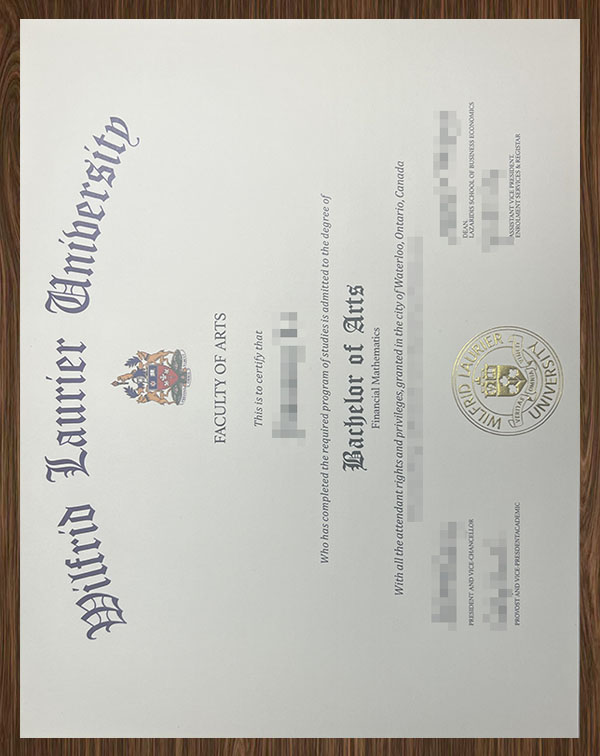
Wilfrid Laurier University occupies a distinctive position within Canadian higher education. Wilfrid Laurier University diploma, Wilfrid Laurier University certificate, Wilfrid Laurier University degree. Neither a sprawling research-intensive giant nor a small liberal arts college, Laurier has constructed an identity around a deliberate paradox: it pursues academic rigour and research impact while maintaining an institutional culture that students consistently describe as personal, supportive, and deeply communal. This profile examines Laurier’s historical evolution, its multi-campus structure, its academic and research strengths, and the factors that distinguish it within Ontario’s competitive university landscape.
Laurier’s origins lie in the Evangelical Lutheran Seminary of Canada, which opened its doors in Waterloo in 1911. The institution’s trajectory from a theological seminary to a provincially assisted university reflects the broader transformation of Ontario’s post-secondary sector. Replica Wilfrid Laurier University diploma online, Perchase Wilfrid Laurier University certificate online. Pre-theological courses began in 1914, and by 1924 the Waterloo College of Arts was offering four-year post-secondary programs. An affiliation with the University of Western Ontario commencing in 1925 allowed Waterloo College to offer honours degrees in the arts until that relationship ended in 1960, when the institution became Waterloo Lutheran University.
How to Quickly Replace a Wilfrid Laurier University diploma Online?
The adoption of the name Wilfrid Laurier University in 1973 marked a decisive secular turn. Little known ways to get a Wilfrid Laurier University diploma. Named after Canada’s seventh prime minister, the university at that point enrolled approximately 2,299 students. Today, Laurier serves over 20,000 undergraduate students and more than 2,300 graduate students across its programs. The institution’s motto, Veritas Omnia Vincit—Truth Conquers All—remains embedded in its coat of arms, which combines maple leaves from Sir Wilfrid Laurier’s personal arms, an open book of learning, and the Luther rose commemorating its denominational heritage.
The Milton campus, while promising, remains in its infancy. Its long-term viability will depend on whether the commuter-student model can build sufficient community cohesion and academic programming depth to compete with established institutions in the Greater Toronto Area. Early signs—student-led governance, rapid club formation, and deliberate attention to belonging—suggest awareness of the challenge.
Wilfrid Laurier University has constructed a coherent institutional identity around a simple proposition: that academic rigour and personal attention are not mutually exclusive. From its seminary origins to its current multi-campus configuration, Laurier has evolved into an institution that measures success not solely by research output or global rankings, but by whether students feel known, supported, and equipped for meaningful work. Its sustainability leadership and social innovation credentials lend that proposition external validation. Whether the model scales—particularly at Milton—remains an open question, but the early evidence suggests that students themselves are invested in making it work.