Canada Diploma
Unusual methods to get a Vancouver Community College degree.
diplomascopy.com
2026-10-20
8 min read
28
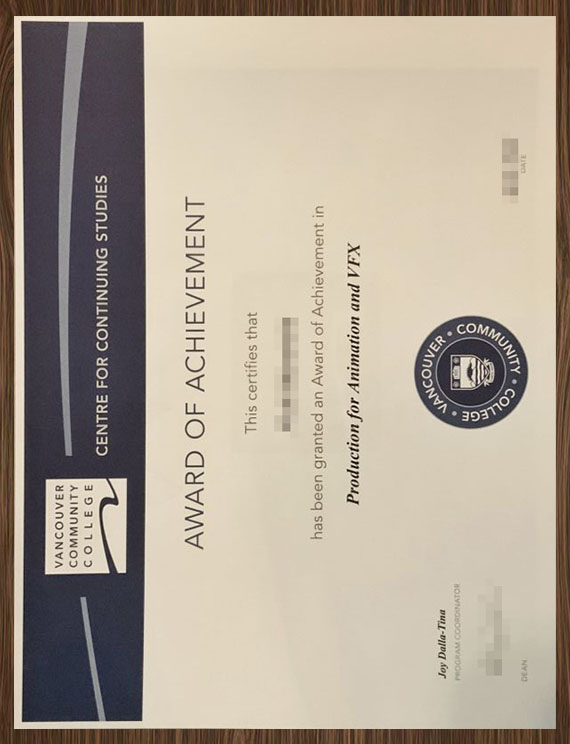
Vancouver Community College occupies a specific and deliberately narrow niche within British Columbia’s post-secondary landscape. Vancouver Community College degree, Vancouver Community College certificate, Vancouver Community College diploma. It is not a university, nor does it aspire to be one. It is a public community college whose institutional logic is oriented almost entirely toward one outcome: equipping graduates with the skills that employers in Metro Vancouver actually need. This focus has produced an institution of considerable scale—serving approximately 25,000 students annually at its peak—and a reputation for applied training in trades, health sciences, hospitality, and design that is difficult to match within the region. This profile examines VCC’s historical evolution, its programmatic strengths, its distinctive operational model, and the tensions inherent in its mission.
VCC’s history reflects the broader development of British Columbia’s community college system. The institution’s roots trace to the vocational training needs of post-war Vancouver, and by the 1970s it had consolidated into a multi-campus college serving both downtown and East Vancouver. Novelty Vancouver Community College degree online, Perchase Vancouver Community College certificate online. The college’s early leadership included A.S. Manera, who served as President and CEO from 1978 to 1985 before departing for a career outside education, having previously led Niagara College in Ontario. His tenure coincided with a period of campus planning and expansion that shaped the institution’s physical footprint.
Over subsequent decades, VCC developed a distinct identity within the provincial system. While other institutions pursued university transfer pathways and academic credentials, VCC leaned into applied training. By the late 2000s, it had become the largest community college in British Columbia, training more hospitality professionals than any other institution in Western Canada and operating one of the province’s largest schools of health sciences. It also served immigrant populations at nearly three times the rate of the rest of the system and was the largest provider of ESL training in the province. These statistics reveal an institution that has functioned, often quietly, as a critical piece of the region’s labour market infrastructure and social mobility architecture.
How to Make a Vancouver Community College degree?
No honest profile of VCC can ignore the tensions that accompany its mission. The most visible emerged in March 2026, when VCC’s Education Council advised the Board of Governors not to approve the proposed 2026/27 Enrolment Plan, citing concerns that proposed program reductions lacked educational rationale and were inconsistent with the college’s stated strategic priorities. The Council requested a public consultation process before any reductions were finalized. This episode reveals the friction between financial sustainability and mission fidelity that community colleges face when enrolment pressures, funding constraints, and labour market signals pull in different directions. Program reductions, however administratively justified, carry disproportionate weight at an institution whose students often have fewer alternative pathways.
A second tension concerns the boundary between applied training and educational breadth.
The rates to make Vancouver Community College degree and transcript. VCC’s strengths are vocational, but its bachelor’s degrees in Music and Hospitality Management, and its university transfer offerings, suggest an institution that recognizes the value of broader education even as its institutional incentives push toward shorter, employment-focused credentials. The college’s strategic materials acknowledge that more than 40 percent of an estimated one million job openings in the coming decade will require the type of diploma, certificate, or apprenticeship training VCC offers, while only 36 percent will require a university degree. This statistic is simultaneously a justification for VCC’s existence and a constraint on its ambitions. The institution’s future depends on whether it can continue to serve that 40 percent well without becoming merely a training vendor for industry.
Vancouver Community College is best understood not as a lesser version of a university but as a different kind of institution altogether. Its success metrics are employment outcomes, industry partnerships, and access for learners poorly served by traditional academic pathways. Its facilities are working bakeries, auto shops, and salons rather than lecture halls. Its faculty are practitioners as often as they are scholars. The institution’s recent expansion in skilled trades and clean energy training, funded by provincial investment, suggests that its model retains political and economic credibility. But the enrolment planning tensions of 2026 indicate that the college’s commitment to access and breadth will continue to be tested against the imperatives of fiscal sustainability. For students seeking a direct, affordable, and industry-connected route into the British Columbia workforce, VCC remains one of the most consequential institutions in the region—precisely because it does not try to be anything other than what it is.