Australian Diploma
Common ways to get a University of Sydney degree online.
diplomascopy.com
2026-10-25
8 min read
19
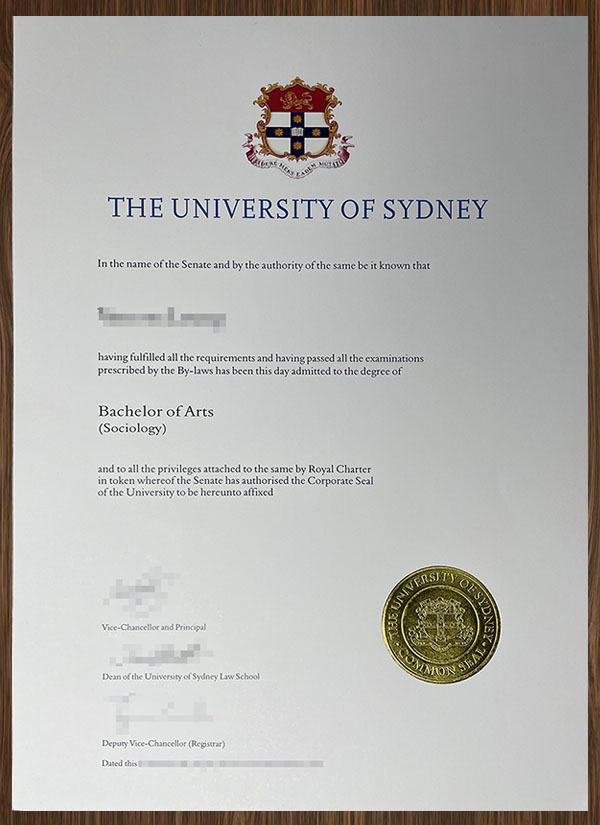
The University of Sydney occupies a singular position in Australian higher education. University of Sydney degree, University of Sydney certificate, University of Sydney diploma. As the nation’s first university, established by an act of the NSW Parliament in 1850 and opening its doors in 1852, it carries the weight of institutional precedence alongside a founding commitment to principles that were radical for their time: religious tolerance and admission on academic merit . More than 170 years later, Sydney remains a leader—ranked 28th globally in the QS World University Rankings and 31st in the US News rankings, while placing 15th in the world for sustainability. Yet its contemporary significance lies less in these numbers than in how a colonial-era institution has repositioned itself for a century defined by quantum computing, artificial intelligence, and the imperative of social equity. Under its “Sydney in 2032” strategy, the university is attempting something ambitious: to be simultaneously Australia’s best teaching university, a global research powerhouse, and a genuinely inclusive community.
Sydney’s founding values were not merely administrative conveniences. The decision to admit students regardless of religious belief and to base entry on examination rather than connection challenged the traditional models of Oxford and Cambridge that had shaped the expectations of colonial educators. Novelty University of Sydney degree online, Replica University of Sydney diploma online. This orientation toward merit and openness produced early milestones: women were formally admitted to all undergraduate courses in 1881, with the first women graduating in 1885; the first PhDs were awarded in 1951; and Charles Perkins, an Arrernte and Kalkadoon man, became the first Aboriginal graduate in 1966, later leading the Freedom Ride that exposed racial segregation in regional New South Wales . These are not incidental footnotes. They establish a pattern of institutional willingness—however uneven—to expand the boundaries of who belongs at a university.
That pattern continues in the present. In February 2026, Sydney launched a refreshed Indigenous strategy, One Sydney, Many People 2025–2032, which commits the university to embedding Indigenous knowledges and leadership as “core business” rather than an add-on . The strategy builds on measurable progress: Indigenous student enrolments increased by 18 percent under the previous iteration, with 35 percent growth in regional and remote participation; student success rates reached 93.3 percent; and completions among Indigenous graduates rose by 33 percent since 2021 . The university also announced the MyGadigal Scholarship, which will provide financial, academic, and cultural support for every Aboriginal and Torres Strait Islander student . These initiatives signal an institution attempting to translate its historical first-ness into substantive contemporary commitment.
How to Make a University of Sydney degree?
The University of Sydney is, by any measure, an elite institution.
Most amazing website to get a University of Sydney degree. Its rankings place it among the top three percent of universities worldwide; its research income and citation impact confirm its influence; its alumni network exceeds 500,000 across the globe . But the more interesting question is what kind of elite institution it is choosing to become. The 2032 strategy’s language of “leadership for good,” its explicit pairing of research excellence with social equity, and its willingness to invest in quantum infrastructure while expanding scholarships for Indigenous students suggest an institution attempting to hold together commitments that are often treated as trade-offs .
This is not a tension that will resolve neatly. The resource demands of competitive global research and the resource demands of genuine access are both real, and the university will face hard choices. But Sydney’s history—from its founding on principles of tolerance and merit to its role in the Freedom Ride and its current quantum experiments—suggests an institutional capacity for adaptation that is more than rhetorical. Whether that capacity proves sufficient for the decade ahead is the question that will define Australia’s first university in its third century.