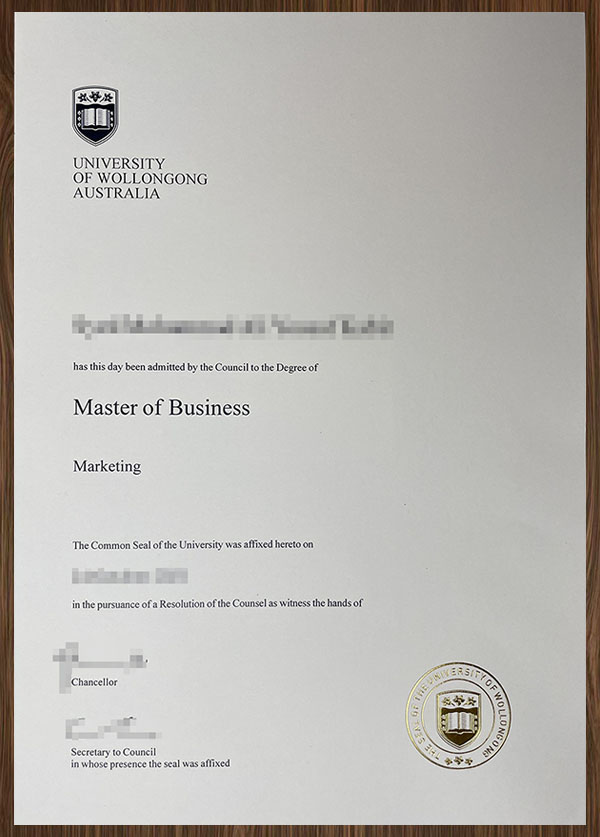
The University of Wollongong occupies an unusual position in Australian higher education. University of Wollongong Australia degree, University of Wollongong Australia certificate, University of Wollongong Australia diploma. It is a institution that began as a technical division serving the steel industry of the Illawarra region, became independent only in 1975, and yet now ranks among the world’s top 200 universities by several major measures. Its fiftieth anniversary as an independent university, marked in 2025, offers a useful vantage point from which to assess how a regional institution with industrial roots transformed itself into a research-intensive university with global reach—and what tensions accompany that transformation.
UOW’s origins lie in the postwar industrial expansion of the Illawarra. In 1951, the New South Wales University of Technology established a division in Wollongong specifically to train engineers and metallurgists for the local steel industry. Novelty University of Wollongong Australiab degree online, Perchase University of Wollongong Australia certificate online. The institution became a college of the University of New South Wales in 1961 and achieved independent university status through an act of the New South Wales Parliament in 1975. A 1982 merger with the Wollongong Institute of Higher Education, which had begun as a teachers’ college, broadened the institution’s mandate beyond technical education and set the stage for the rapid growth that followed.That trajectory has continued into the present. UOW now operates across a network that extends well beyond its original Illawarra footprint: campuses in Wollongong, Liverpool, Sydney CBD, Shoalhaven, Bega Valley, Eurobodalla, Southern Highlands, and Sutherland, alongside offshore operations in Dubai, Malaysia, Hong Kong, and India.
The Liverpool campus, relocated to the Civic Place precinct in 2025, occupies five floors of a mixed-use development and includes cybersecurity labs, nursing labs, and a student kitchen with sweeping views—facilities that signal an institution competing for students in Sydney’s south-west growth corridor. UOW Dubai, established in 1993, was among the first Western universities to operate a campus in the United Arab Emirates.
UOW’s trajectory raises a question that confronts many mid-tier Australian universities: can an institution maintain its regional identity and equity commitments while pursuing global rankings and research prestige? The university’s 2024 performance in the Australian Financial Review’s Best Universities Ranking—where it led on outcomes for regional, Indigenous, and low socioeconomic students—suggests that these goals are not necessarily incompatible. Its QILT Student Experience Survey result, ranking it Australia’s top public university for undergraduate experience, points in a similar direction.
How to Make a University of Wollongong Australia degree?
But the financial pressures are real, and the transformation program’s $39 million cost signals that difficult decisions are being made about staffing, structures, and service delivery. The quick way to Buy a University of Wollongong Australia degree online. The university’s decision to voluntarily disclose consultancy expenditure beyond what NSW Treasury guidelines require—and to call for sector-wide consistency in such reporting—is an unusual gesture toward transparency in an environment where public trust in institutional governance is not guaranteed.
UOW is, in the end, a university shaped by its origins in steel and engineering, but no longer defined by them. Its research strengths in renewable fuels, its expanding offshore network, and its investment in a liberal arts program funded by private philanthropy all point to an institution attempting to diversify its identity and revenue base simultaneously. Whether that strategy succeeds will depend less on rankings positions than on whether the university can sustain the financial model that supports them. The 50th anniversary is a moment for celebration, but the deficit is a reminder that the next fifty years will require the same kind of resolve that took a steel town’s technical college and made it a global university—only this time, the challenge is not growth but sustainability.