United States Diploma
How to Make a California State University Chico degree?
diplomascopy.com
2026-10-30
8 min read
0
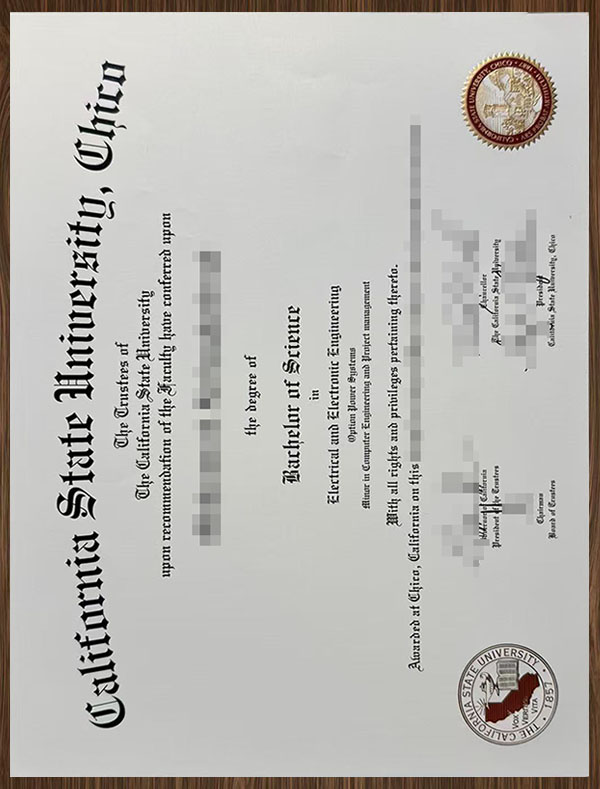
California State University, Chico occupies a category that is often underestimated in discussions of American higher education: the regional public university that does its job well. California State University Chico degree, California State University Chico certificate, California State University Chico diploma. Founded in 1887, it is the second-oldest campus in the twenty-three-member CSU system, and it has spent well over a century serving the northern Sacramento Valley while gradually building a national reputation for value and student outcomes. Its U.S. News ranking of 16th among 118 regional universities in the West is respectable but not remarkable on its face. What makes Chico State worth examining is not its rank, but the relationship between what it costs, whom it serves, and what its graduates earn.
Chico State is not a selective institution, and it does not pretend to be. Novelty California State University Chico degree online, Replica California State University Chico diploma online. Its acceptance rate sits at roughly 91 percent, and the average high school GPA of admitted students is 3.52. Nearly all of its students—97 percent—come from California, with the largest share drawn from its immediate service area, followed by the Sacramento region, the Bay Area, and Los Angeles. Pell Grant recipients make up 42.5 percent of the undergraduate body, and nearly half of undergraduates arrive as transfers or part-time students. These are not the demographics of a university that recruits nationally on prestige. They are the demographics of a university that serves its region.
How to get the California State University Chico degree?
The financial picture reinforces this orientation.
Unexpected ways to own a California State University Chico degree. In-state tuition and fees stand at $9,344 for the 2026–27 academic year, well below the national average for public four-year institutions. For students from families earning under $30,000, the average net cost after aid is $10,716; for those in the $30,001–$48,000 bracket, it is $11,375. The university meets 55 percent of demonstrated financial need on average, which is not generous by the standards of well-endowed private colleges but is roughly consistent with public institutions of its type. What matters more is the debt picture: only 27 percent of graduating students have borrowed, and the average borrower debt at graduation is $5,715—a figure that is almost anomalously low in the American higher education landscape.
California State University, Chico is not trying to be something it is not. It is a regional public university that admits most applicants, charges comparatively little, serves a largely local population, and produces graduates whose earnings exceed what their demographic profiles would predict. Its weaknesses—a four-year graduation rate that leaves room for improvement, a dependence on California residents that limits its national footprint—are real but not unusual for its category.
Its strengths are the strengths that matter most to the students it serves: affordability, accessibility, and a demonstrable return on the investment of time and money. For a student in northern California seeking a degree without accumulating crippling debt, Chico State offers a proposition that is coherent, well-documented, and increasingly difficult to dismiss as merely regional.