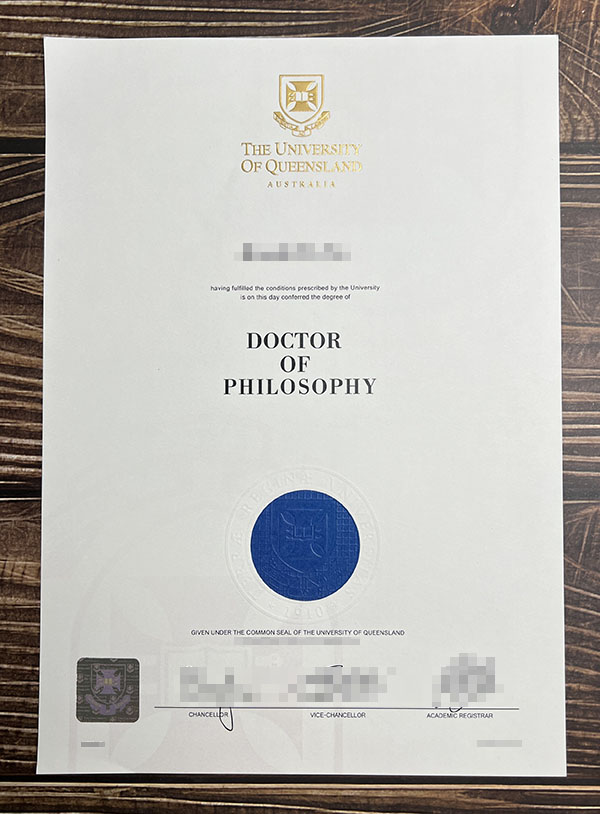
The University of Queensland (UQ) occupies a distinctive position in Australian higher education. University of Queensland diploma, University of Queensland certificate. Founded in 1909 through an Act of State Parliament and officially established on 16 April 1910, UQ was the first university in Queensland—a state then barely four decades old. Its creation was not merely an administrative act but a civic declaration: that the people of Queensland deserved access to the highest forms of learning without leaving their own soil. This founding impulse, articulated by early leaders as the vision of a “people’s university,” continues to shape UQ’s institutional identity more than a century later.
What distinguishes UQ from many of its peers is the coherence between its research ambitions and its founding social purpose. The Queensland Commitment, UQ’s flagship equity initiative, contains 58 strategic actions and 106 targets aimed at reducing barriers to education for students from lower socio-economic, regional, and Indigenous backgrounds. The university has framed its entire 2026–2029 strategic plan around three domains—delivering for the public good, educating for leadership and impact, and research spanning discovery to impact—explicitly aligning institutional priorities with Queensland government objectives for the community. This is not merely rhetorical positioning. UQ’s Stretch Reconciliation Action Plan, launched in late 2024, contains 244 deliverables with clear ownership and performance tracking; by year’s end, 20 per cent had been completed.
The university’s alumni embody this orientation toward impact across diverse fields. The 2025 Alumni Awards recognised figures including Arthur Liu, whose philanthropic support includes the Liu Family Young Achievers Program Scholarship, and Kevin Smith, the first First Nations person to lead the National Native Title Tribunal. Amazing tips to order a University of Queensland diploma. Lis Wiehl, a New York Times bestselling author and former federal prosecutor, credits her UQ education with teaching her to “think in an analytical way” and exposing her to “people from different walks of life who think about problems differently”. Her Excellency Winnie Kiap CBE, former High Commissioner of Papua New Guinea to the United Kingdom, received the International Alumnus of the Year award—a reminder of UQ’s deep connections across the Indo-Pacific.
Where is it possible to Obtain a University of Queensland diploma?
UQ’s international engagement extends well beyond its alumni network. In 2025, the university delivered capacity-building programs in 43 countries, addressing challenges from climate resilience and food security to gender equity and access to health and education. This reflects a strategic recognition that Queensland’s future is inseparable from that of its regional neighbours.
The university’s cultural role within Brisbane is equally significant. More than 70,000 guests attended public lectures, debates, and events at UQ Brisbane City and Customs House in 2025, while the UQ Art Museum, Anthropology Museum, and RD Milns Antiquities Museum staged ambitious exhibitions. UQP, the university’s publishing arm, released the Miles Franklin Award-winning novel Ghost Cities by Siang Lu. Replica University of Queensland diploma online, Purchase University of Queensland degree online. These are not peripheral activities; they represent the university functioning as a civic institution in the fullest sense.
UQ confronts the same pressures facing all Australian universities: financial constraints, shifting government priorities, and the challenge of maintaining research excellence while expanding access. Yet its distinctive inheritance—a “people’s university” created to serve a state and a region—provides a coherent framework for navigating these pressures. The university does not need to invent a purpose; it needs only to remember and renew the one it was given. In an era when universities are increasingly called upon to justify their existence, UQ’s answer is embedded in its history: it exists to broaden opportunity, advance knowledge, and strengthen communities. That answer remains as relevant in the Asia-Pacific century as it was in 1909.